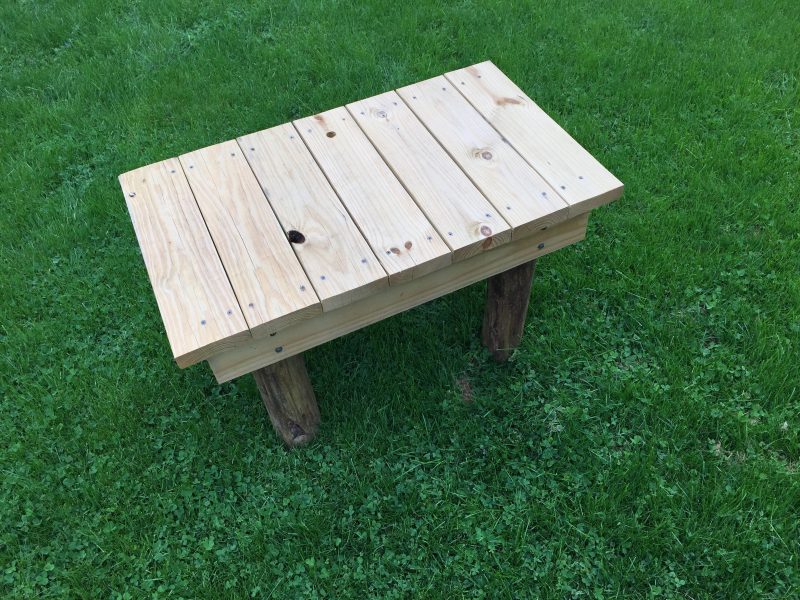
There’s never enough space for all the stuff when I cook on the grill, so I set out to build a table to solve that problem. For a unique look, I used round poles for the legs and 2×6 for the frame and top.
I always need more room for grill stuff This wood working project is awesome by the grill
First thing I do is make a box. Front and back are 36-inches. The left and right sides are 17-inches.
We teamed up with Wood Its Real for this project The design how to and project are ours And yours if you DIY it
To build a table with a square frame, I make sure the sides are perpendicular to the front and back before installing the legs. It’s not super critical but it helps. Using a diagonal brace to hold the boards in place while you build (you can’t see the brace in this photo) helps a lot.
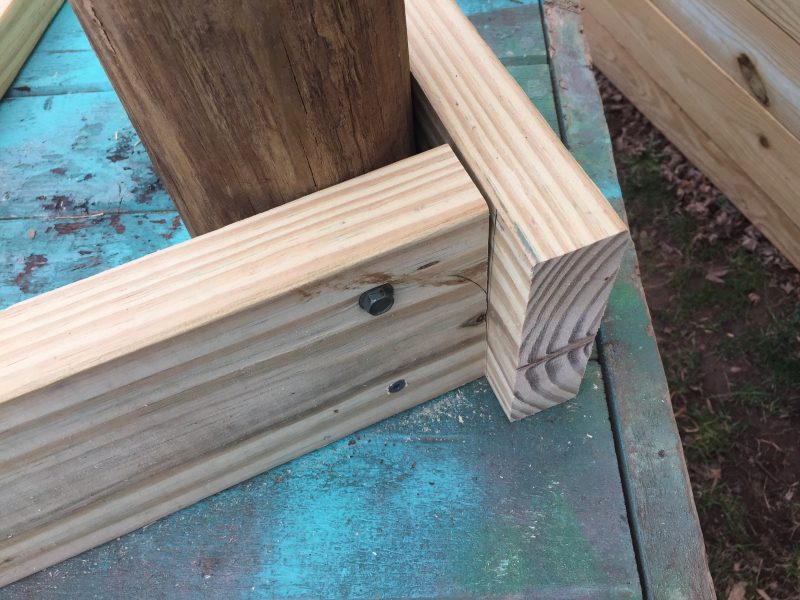
The legs are pressure treated Southern Yellow Pine round poles (6-inch diameter). My lumber yard stocks them so they’re easy to get and the look is cool. With the table frame squared up, I install the legs using 5/16 x 5-inch Spax PowerLags.
I assemble the table upside down on a flat surface like this work table
Assembly tip: I hold the legs in place by first sinking two 3-inch deck screws on each corner. Then I remove one screw and replace it with the larger structural screw. The smaller screws sink into the wood without moving it and leave me with a nice pilot hole for the larger screw. And they hold the leg in place while the larger screw is set.
Sides are inset from the front and back pieces 1 12 inch
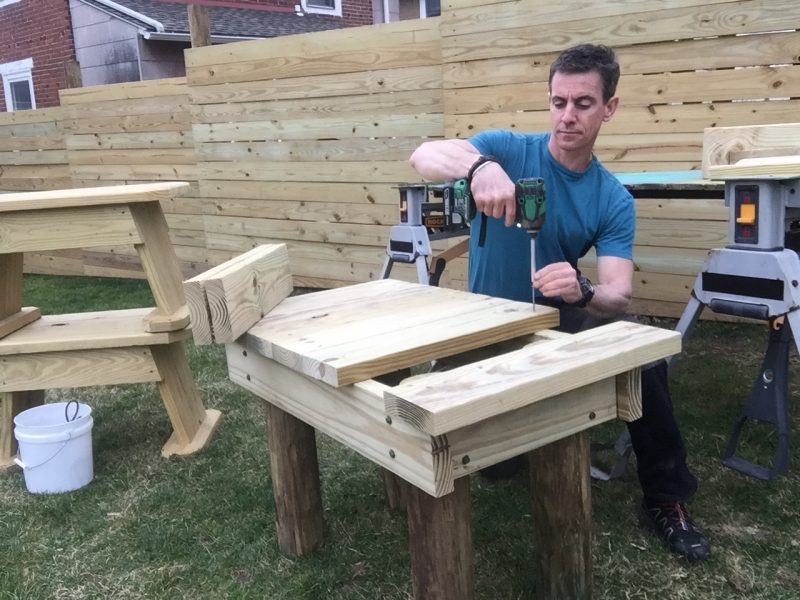
The top is made from 2×6 cut 23-inches long. I used 3-inch deck screws to secure them to the frame. I like to build a table with even ‘reveals’. That means the tops over-hangs the frame evenly on each side, 1 1/2-inch on the front and back. A 2-inche overhang on the sides lets seven boards fit nicely.
Install the table top This is basically a small deck
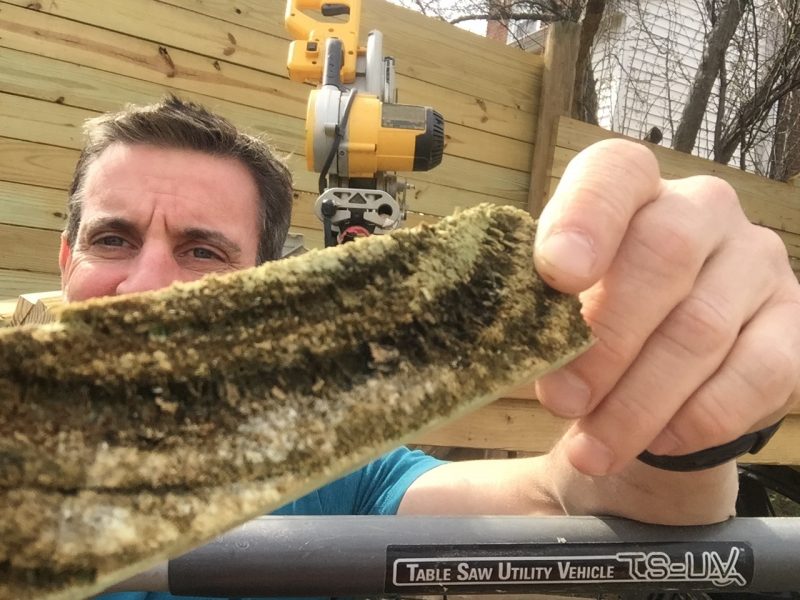
Tip: This is framing grade lumber and sometimes the sawmills’ blades get dull and leave us with some ends a little too rough to build a table with. No big deal. For a project like this, I usually cut the ends nice and square on the miter saw before assembly.
Nip the ends to square them up
Tip: To get the ends of the table top super-even, borrow a tip from this project: Run the top pieces a little long, then—like a deck—mark the reveal on each end. Draw a line and cut all the pieces at once with a circular saw.
You can tune up the ends with a circular saw like I did with this the Best Ever BenchShot from overhead
Image already added
Mark
A licensed contractor, tool expert, wood and outdoor enthusiast, and elite Spartan Race competitor, he writes about home improvement and tools for national magazines and websites, and teaches hands-on clinics for other remodeling professionals. Check out his book, The Carpenter's Notebook.
Contains information related to marketing campaigns of the user. These are shared with Google AdWords / Google Ads when the Google Ads and Google Analytics accounts are linked together.
90 days
__utma
ID used to identify users and sessions
2 years after last activity
__utmt
Used to monitor number of Google Analytics server requests
10 minutes
__utmb
Used to distinguish new sessions and visits. This cookie is set when the GA.js javascript library is loaded and there is no existing __utmb cookie. The cookie is updated every time data is sent to the Google Analytics server.
30 minutes after last activity
__utmc
Used only with old Urchin versions of Google Analytics and not with GA.js. Was used to distinguish between new sessions and visits at the end of a session.
End of session (browser)
__utmz
Contains information about the traffic source or campaign that directed user to the website. The cookie is set when the GA.js javascript is loaded and updated when data is sent to the Google Anaytics server
6 months after last activity
__utmv
Contains custom information set by the web developer via the _setCustomVar method in Google Analytics. This cookie is updated every time new data is sent to the Google Analytics server.
2 years after last activity
__utmx
Used to determine whether a user is included in an A / B or Multivariate test.
18 months
_ga
ID used to identify users
2 years
_gali
Used by Google Analytics to determine which links on a page are being clicked
30 seconds
_ga_
ID used to identify users
2 years
_gid
ID used to identify users for 24 hours after last activity
24 hours
_gat
Used to monitor number of Google Analytics server requests when using Google Tag Manager