It takes some strategy and patience–and muscle–to take pallets apart so you can actually use the material to build something else. Here are 4 tips that will help you break down pallets like a pro.

Every time I think pallet DIY mania has peaked, it peaks again! Sheds, beds, shelves…it’s officially a thing. An uber thing if you will. If you won’t, then these tips on how to take a pallet apart without turning it into kindling might not be your thang.
Even if you have projects where you’re using whole pallets, like a compost bin or deck, holding them together may prove befuddling. Then add to all this that pallets are typically made with harder wood species like poplar and red oak and you have a recipe for pallet DIY pi++ed off-ness.
So to mine pallet gold for pallet DIY without ruining the entire thing—and to make connections that connect—I hope these tips help. One thing first: Pallet geography. The frame the thinner boards are nailed to are called spreaders; the thinner boards are decking.
Here’s how to break down pallets so you can use the material to build something else.
To remove flush decking.
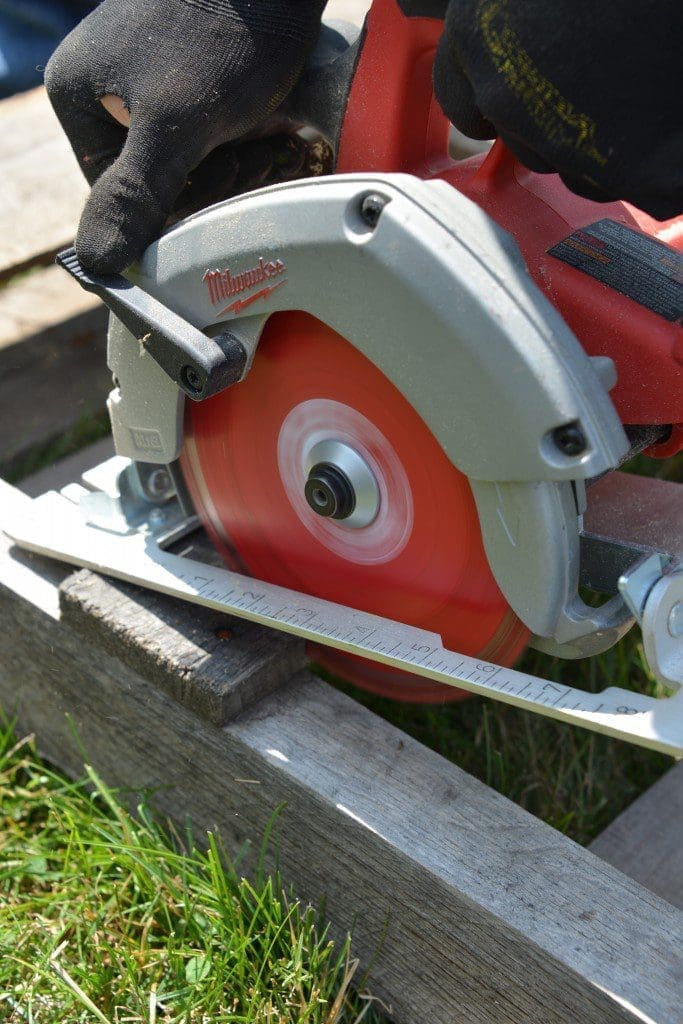
Let’s get started and take pallets apart. When the decking is flush to the edge of the spreader, the chances prying the board off without splitting the ends is negative 396%. What I do instead is carefully cut the ends with a circular saw inside the spreader then pry the center nails.
The nails are often so hard to remove, they break, so I bash them down or cut them off once I’ve removed the board.
To remove cantilevered decking.
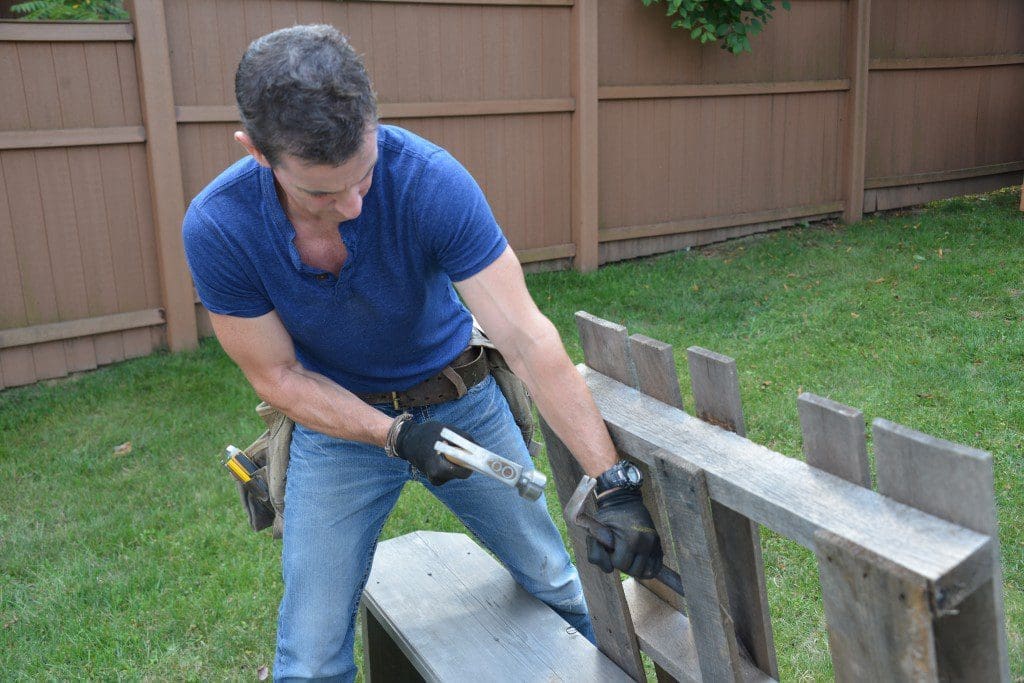
To remove deck boards that stick out past the spreader, I lean the pallet up on a work bench like my backyard bench or sawhorse then attack it from the back with a hammer and flatbar. I pry a little at a time. The wood is usually so brittle so big moves will almost always break or split it when you take pallets apart.
To connect spreaders.
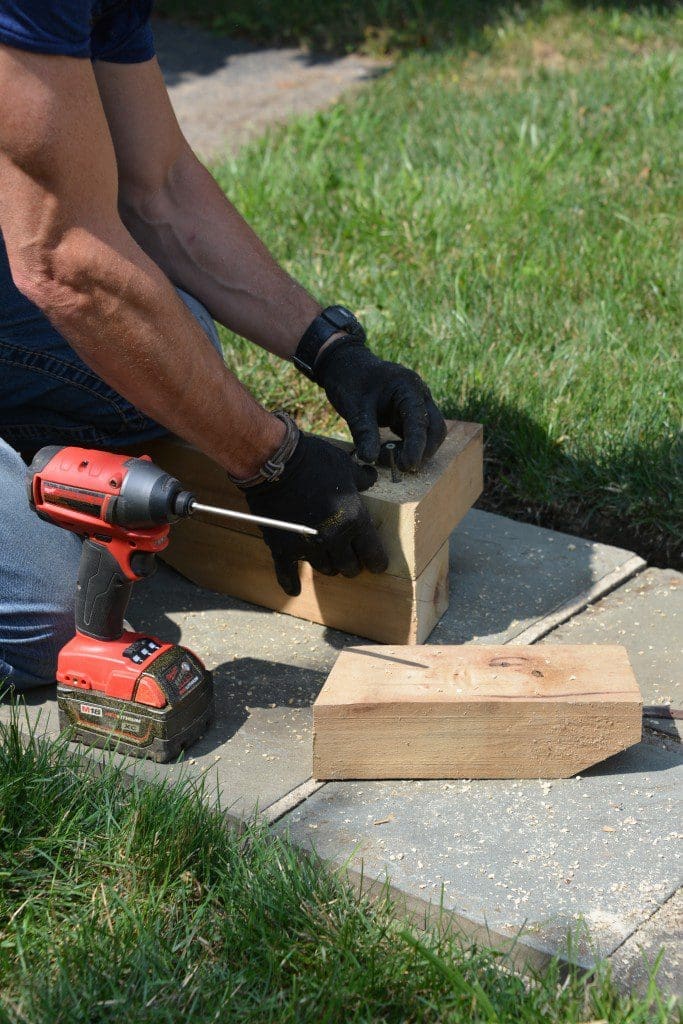
Pallet DIY often requires connecting pallets or pallet parts, like in our Bee house. Spreaders are often thicker material than we find at the lumber yard. Even honkin’ 3-inch deck screws are sometimes way too short. To sidestep this, I use a 1/2-inch paddle bit and counter-bore (drill about half way through) a large spreader. This makes it so a 3-inch screw can reach the next block—and get a bite. Make sure your driver bit fits in the hole too. I like the long, one-piece driver bits better than magnetic bit holders.
To save time.
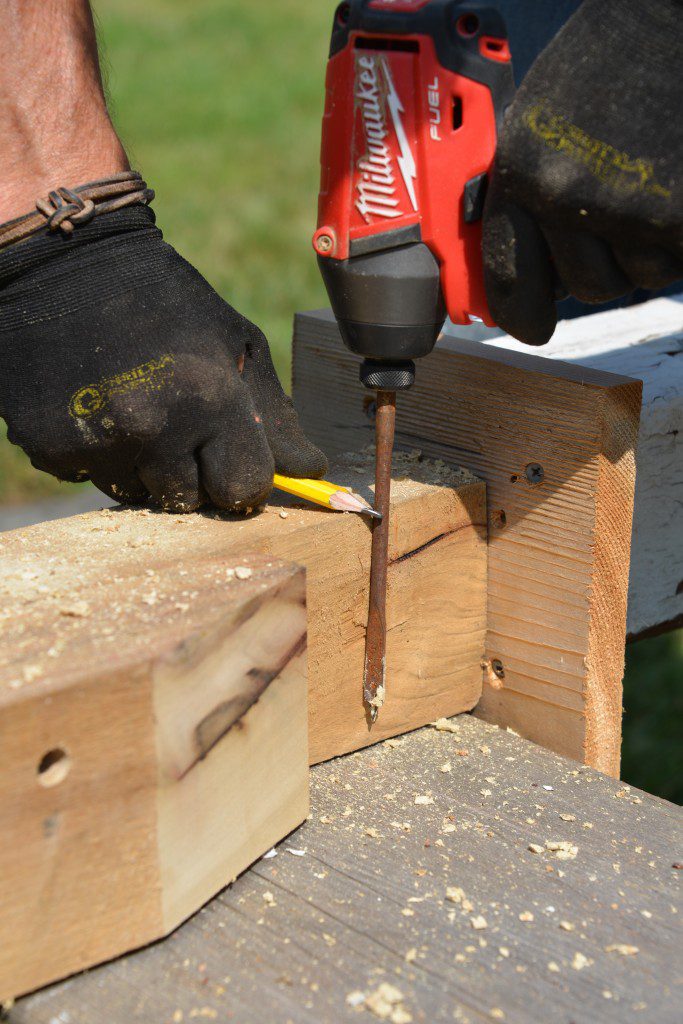
If I have to make the same counter bore a bunch of times, I mark my drill bit. No need to run in the house for tape. I just spin the bit against a pencil at the depth I like.





[…] lumber isn’t using 4-trillion pallets for wall paneling or pulling boards you got at a big box store from your hoard. That’s just […]
I recently received an e-mail from a friend that had your back yard pallets that you turned into beautiful seating! I would so love to make these. I don’t have measurements or exactly what I need to cut if anything in the pallets to do this can you help please!!!
im looking for the site or project on How you made your seating out of wood pallets.. I really need this . even if my hubby wont have the time to do this it I will … lol