The only way to wear out this outstanding Fiskars hammer is to lose it.
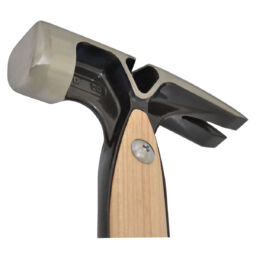
There’s a lot of hoo-ha in hammers for remodeling and DIY. Just walk the hammer area at any big box and you’ll see every hammer maker crying out for your attention on budget or blunt force. Hidden inside the hammer space is an excellent general use hammer that has both all the so-called features and benefits, delivers on details and can deliver a ka-thunk. It’s the 20-ounce general use Fiskars hammer.
Topline Observations
- 20 ounces is a sweet spot for me for how I use hammers.
- Head and face are steel and steel moves stuff without having to death stroke it.
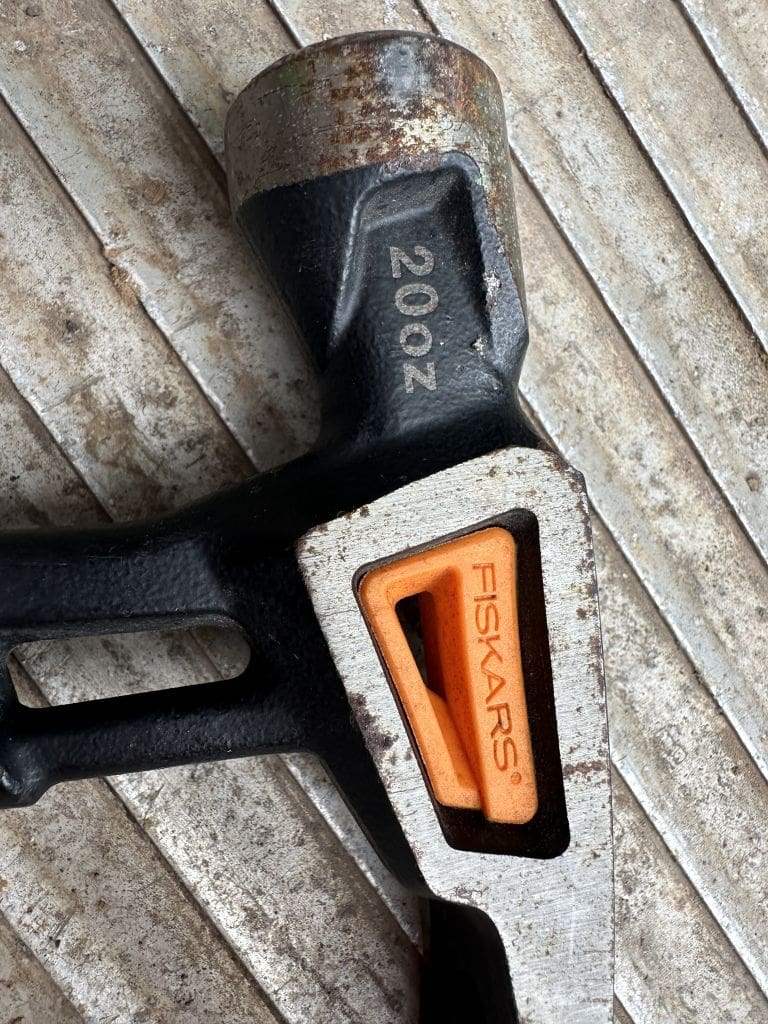
- The head looks slightly pitched toward the bottom of the hammer. Ideally, this accommodates for the arc of a proper hammer swing.
- The rip claw’s “fetch” is shallow.
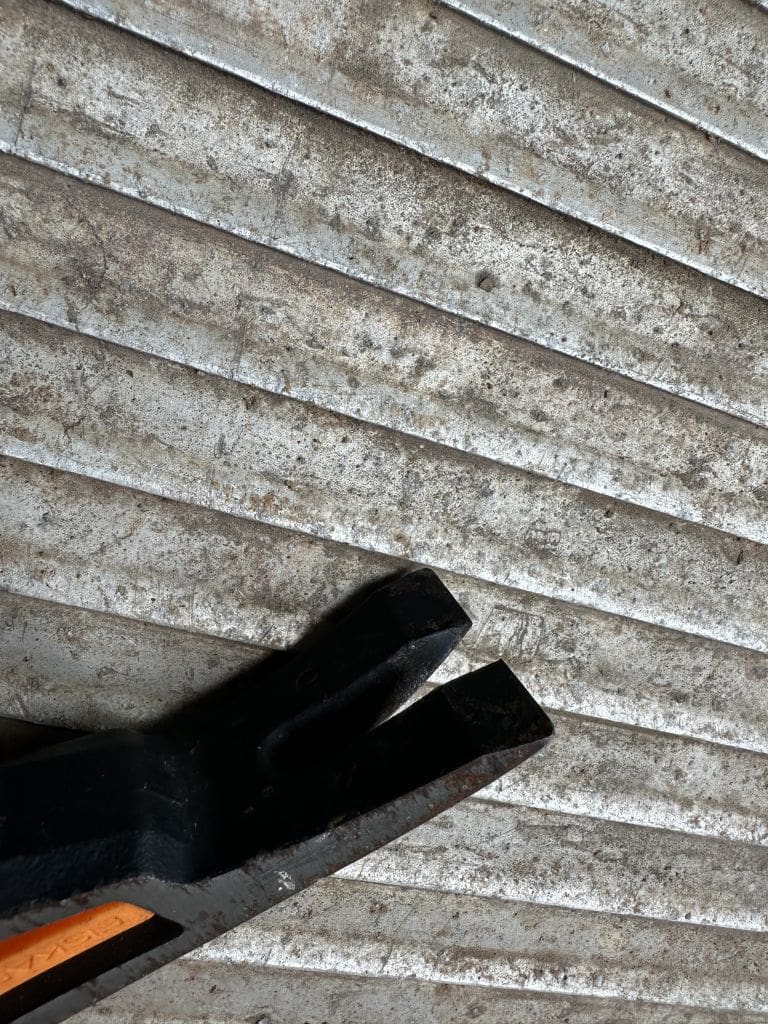
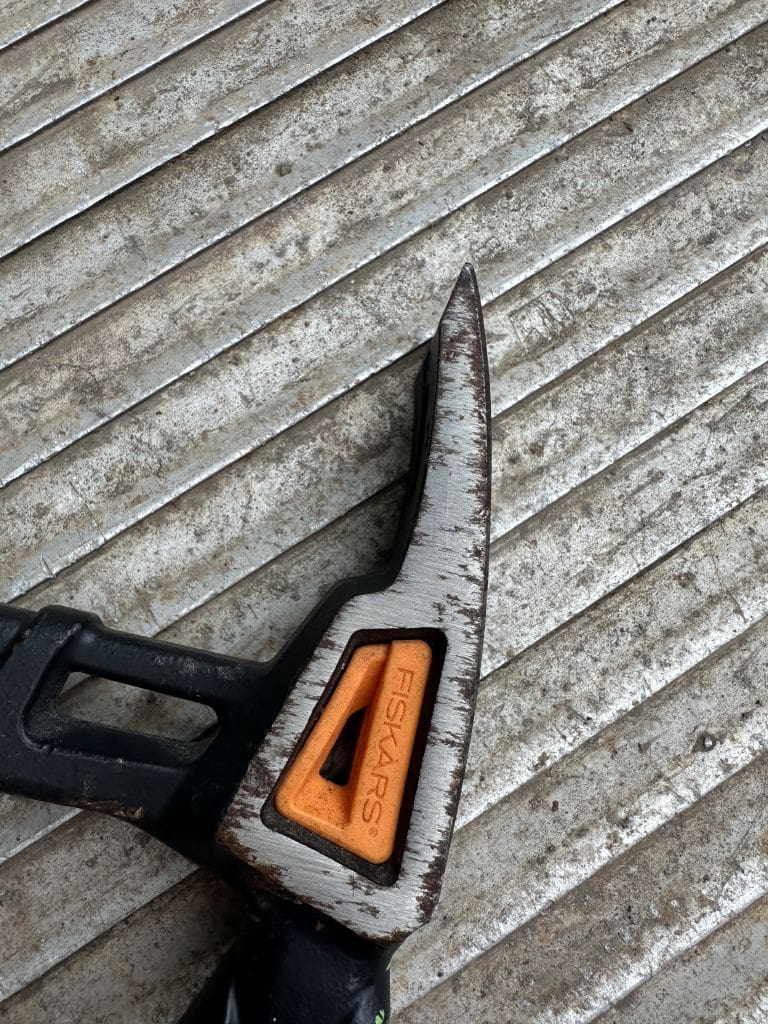
- The rip claw is sharp.
- Great balance design.
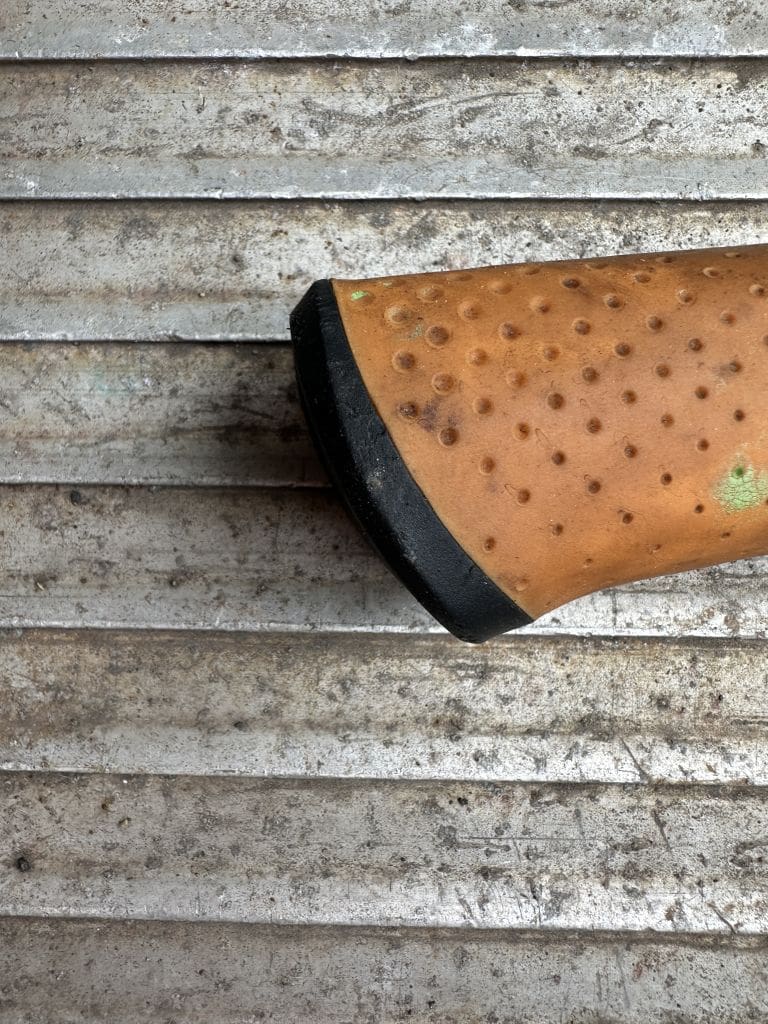
- The grip is grippy without being gummy.
- Slight hatchet-handle serves several purposes.
- Is “IsoCore” Vibration dampening? Maybe. I’m not a lab.
- It’s right-sized for most of the work I do; a little undersized for some of the heavier work I do.
Review Summary
Outstanding hammer. The Fiskars hammer delivered on all metrics from comfort and balance from blunt force smash-and-grab to tapping a nail set. Light enough to not require back surgery wearing it in my belt all day. Heavy enough to do most of what I need to do.
The Test
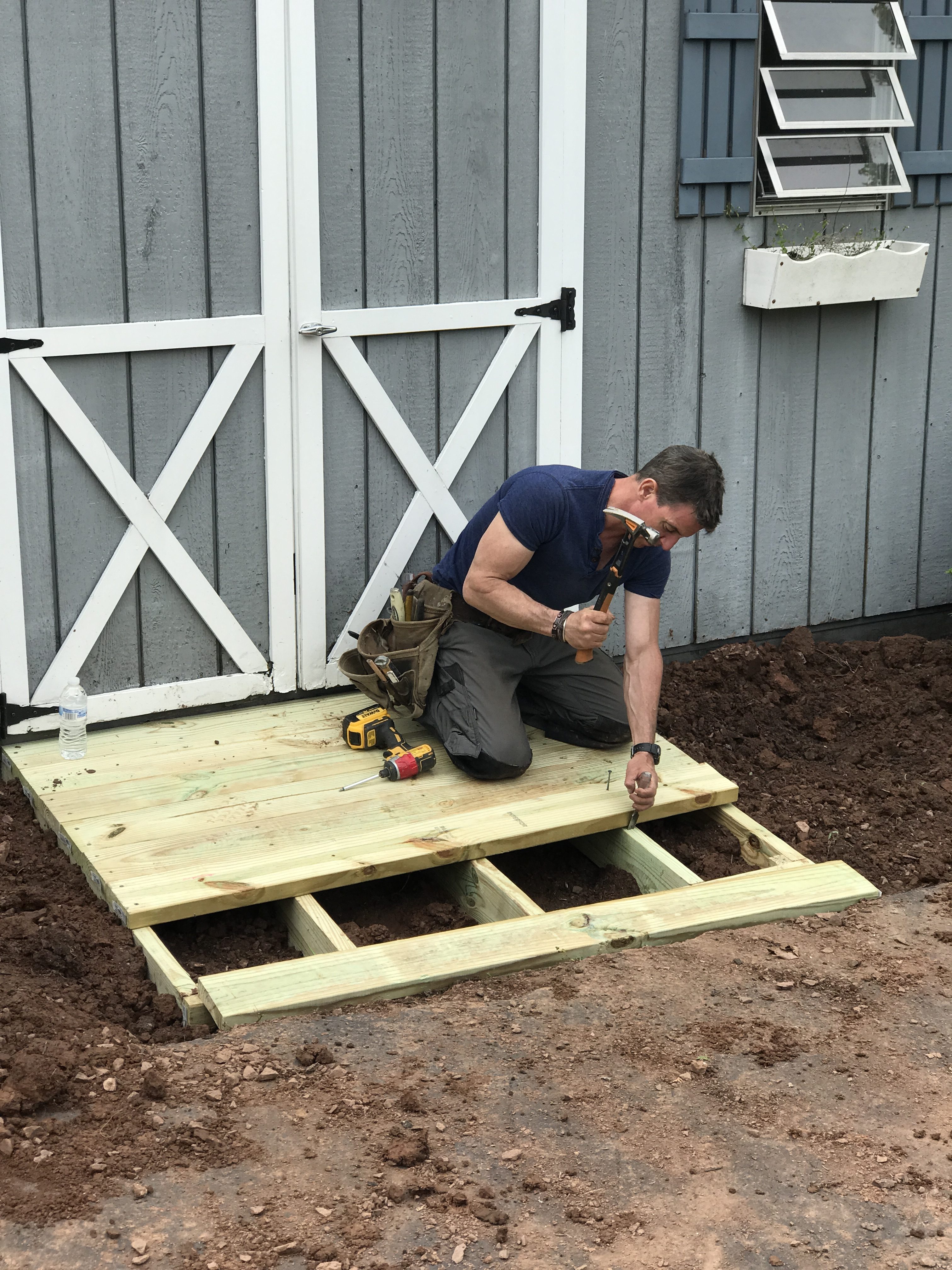
We used the Fiskars 20-ounce general use hammer for months on umpteen remodeling projects from decks to demo to interior remodeling to pulling out the bolt that keeps my dumptruck tailgate closed.
The Tester
We’re full-service remodelers and deck builders with tendrils into fence building, pergolas, kitchens, basements and more. As such, we really don’t drive nails very often. Our hammer use is mainly as a “persuader” or on-board lever we use to nudge everything from a fence gate or door into plumb to wedging under a deck board we’re pulling up.
Side Note: When I say “deck board we’re pulling up” Fiskars 30-inch Wrecking Bar with Hammerhead is front and center for this activity. Super versatile demo bar.
The Results
For the work we do, the Fiskars 20-ounce general purpose hammer lives up to its name and the online claims.
Feel
This Fiskars hammer is well balanced. It’s light enough to be light, but heavy enough to be heavy enough. Fiskars sweet-spotted this.
As a corollary, there are much more expensive titanium hammers on the market that claim making hammers lighter and out of Space Shuttle parts dampens vibration.
OK, maybe. But do they do the same work a smaller steel hammer does in our line of work? Not really. The space age head has to be huge and for some tasks, you just have to whale on the work so hard I don’t see any cost-benefit there.
It’s a little short compared to the hammers I’ve used. That’s not even a criticism of the Fiskars hammer, just an observation.

The Head
I have no way to measure this, but much like one of its forebears, the rigging axe, the Fiskars head looks slightly canted. This accommodates for the circular motion of a hammer strike, optimizing the strike force as the swing comes around. Brilliant.
Rip Claw Fetch
Fetch refers to the curvature of the hammer’s claw. The more shallow the fetch, the more useful the hammer is—it can’t be zero—the better. Fiskars nailed this with a very shallow fetch that enables me to get the hammer claws behind and under things.
40 years ago, a hammer’s primary job was to drive nails. Pneumatics and cordless technology (how much do I love my Skil 20-volt PwR Core Impact Driver) have supplanted hand-drive nails in all but a few pockets of the industry.
Today, a hammer’s primary function is to drive a few nails, sure. But more to smash, nudge, wedge, pull, pry and hold.
Fiskars low fetch, thick claws and chisel-sharpened teeth are dialed and super durable.
Durability
The only way to wear this thing out is to lose it. This is a lifetime supply of hammer in my opinion.
Grip
This is another place Fiskars really sweet-spotted this tool. There is a fine line between “grippy” and “so gummy, I can’t let go.”
Whether it’s gushing sweat or working in the cold with gloves (themselves with a grip element), the Fiskars hammer lands for me.
The Knob
On an axe or hatchet, the flare at the end of the handle is the “knob.” I like the Fiskars knob for two-reasons. And they couldn’t possibly have designed one of them.
- The first reason feels obvious: It supports your grip as the head comes around and impacts whatever you’re hitting.
- The second reason may well be particular to me and my Overnight Lead Carpenter I learned this from during our Extreme Makeover: Home Edition build.
There are a million and one tool pouches but the lead carpenter, like me, wore what we call “side bags.” Essentially, there’s a tool pouch on each hip. About 90% of the time the hammer will be placed behind you, in line with your spine. I did it that way for years until I saw this dude’s tweak. So simple it’s stupid: He moved the hammer loop to his right hip. Brilliant. It keeps the hammer more accessible and from smashing the insides of your knees as you walk.
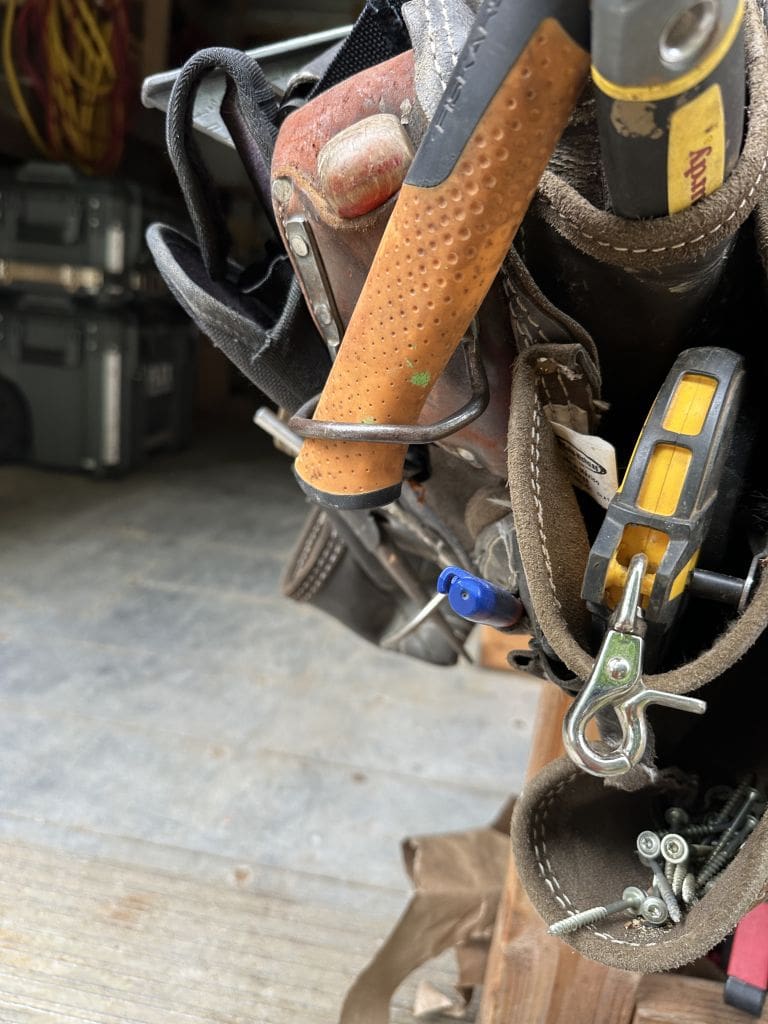
I followed suit and haven’t looked back. However, with side bags, the hammer loop is still behind you. You can’t see it. The knob (or pommel) on the Fiskars 20-ounce hammer acts as a hook and helps me find that blind spot without having to look for it.
Bottom Line
At about 50 bucks, this Fiskars hammer pays for itself in a week or even in a few hours. The claw sharpness and fetch alone beats brand new hammers with decades old designs I abandoned a long time ago. I won’t name names.
And, because the claw-body is so meaty, I can sharpen the heck out of this if I want to.
Get the Fiskars 20-Ounce Rip Claw Hammer from Amazon for less than $50.
MyFixitUpLife Editors’ Choice?
- 100% for the Fiskars hammer